10 hr
Kartli Heritage Tour: Uplistsikhe Caves, Gori & Mtskheta's UNESCO Sites
Journey through Georgia's ancient heartland visiting cave cities, monasteries and Stalin's birthplace
Reserve
Hand-picked by our editors — only the best 5 experiences from 12 reviewed.
Verified partners for every tour, free cancellation where available, and instant confirmation on every booking.
10 hr
Journey through Georgia's ancient heartland visiting cave cities, monasteries and Stalin's birthplace
Reserve
9 hr
Journey through Georgia's ancient past visiting UNESCO sites, cave cities, and Stalin's birthplace
Reserve
10 hr
Journey through millennia of Georgian heritage, from cliff-carved monasteries to Stalin's birthplace
ReservePrices from verified partners. Availability updates in real time at checkout. Free cancellation policies apply where shown.
The landmarks, rooms, and views travelers on this tour remember — all visible on a single visit.
The largest structure in the complex, featuring impressive rock-carved columns imitating wood architecture.
A significant pre-Christian site with an arched portico and an inner recess.
A 41-meter vertical shaft that served as a water supply and emergency exit to the Mtkvari River.
A unique cave structure with a pointed arch, likely used for ancient mystery plays.
A 10th-century brick church situated at the highest point of the site, overlooking the valley.
Uplistsikhe is ideal for those seeking a quick cultural excursion, while Vardzia offers a more immersive exploration of a sprawling monastic city; most visitors choose based on their travel time constraints. Planning an uplistsikhe day trip from tbilisi tours the ancient rock-hewn foundations of central Georgia, whereas a trip to the south involves a significantly deeper commitment to the landscape.
| Feature | Top pick Uplistsikhe | Vardzia |
|---|---|---|
Location from Tbilisi |
~100 km (1.5 hours) | ~260 km (4 hours) |
Complexity of site |
Compact rock-hewn settlement | Extensive multi-level monastery complex |
Physical intensity |
Moderate uneven terrain | High with steep climbs |
Accessibility |
Generally accessible via paths | Requires navigating narrow passages |
Historical period |
Iron Age to Middle Ages | 12th-century Golden Age |
Transport time |
1.5–2 hours by car | 4–5 hours by car |
| See tickets → |
Verdict: Choose the uplistsikhe day trip from tbilisi tickets if your itinerary is limited, or opt for Vardzia if you desire a comprehensive adventure into Georgia's historical landmarks with your uplistsikhe day trip from tbilisi tour options providing distinct cultural context.
Choose your ticket, select your date, and reserve in under two minutes. Secure checkout handled by our verified partner.
Instant confirmation by email, with a mobile voucher you can save offline. No printing, no queuing at a collection desk.
Arrive at the entrance, show your voucher on your phone, and walk in. Most tickets include priority or skip-the-line access.
Practical details for your visit straight from our verified partners — hours, access, rules, and how to get there.
Gori city center
Taxi pick-up point for the final leg to the site
Drive west on the highway toward Gori; turn toward Kvakhvreli village for the site access.
Casual and comfortable clothing is recommended for walking. Modest attire, covering shoulders and knees, is required only when entering the 10th-century church on the plateau.
There are no locker facilities on-site, so carry only small daypacks. Security is minimal, but please stay on marked paths to protect the site's integrity.
Photography is permitted throughout the exterior of the cave complex. Tripods may be used provided they do not obstruct other visitors during your uplistsikhe day trip from tbilisi.
The site is not suitable for strollers or wheelchairs due to the natural, uneven rocky landscape. Visitors should be prepared to navigate stairs and inclines.
The cave system is fascinating for older children, but parents should be cautious of sheer drops. An uplistsikhe day trip from tbilisi is best managed with carriers for younger toddlers.
Carry sufficient water and snacks as there are limited options inside the monument. Restaurants are found near the entrance, but availability varies seasonally.
Best time to go, insider tips, nearby landmarks, and the cancellation fine print — flip through to skim what matters to you.
How crowds, weather, and events shift across the year.
Mild temperatures make this a perfect season for an uplistsikhe day trip from tbilisi.
Small details that turn a good visit into a great one.
The sandstone has been worn smooth over centuries and is slippery, especially on slopes. Choose footwear with excellent traction for your uplistsikhe day trip from tbilisi.
Non-bookable sights within a short walk — free to visit, easy to pair.
Exhibition dedicated to the history of Joseph Stalin in central Gori.
Flexible, no hidden fees.
Entry fees are non-refundable once purchased at the site gate. Please check your travel plans before arriving at Uplistsikhe.
Hand-picked options within walking distance — pick a district for vibe, or a specific hotel for convenience.
Various guest houses available in the town center.
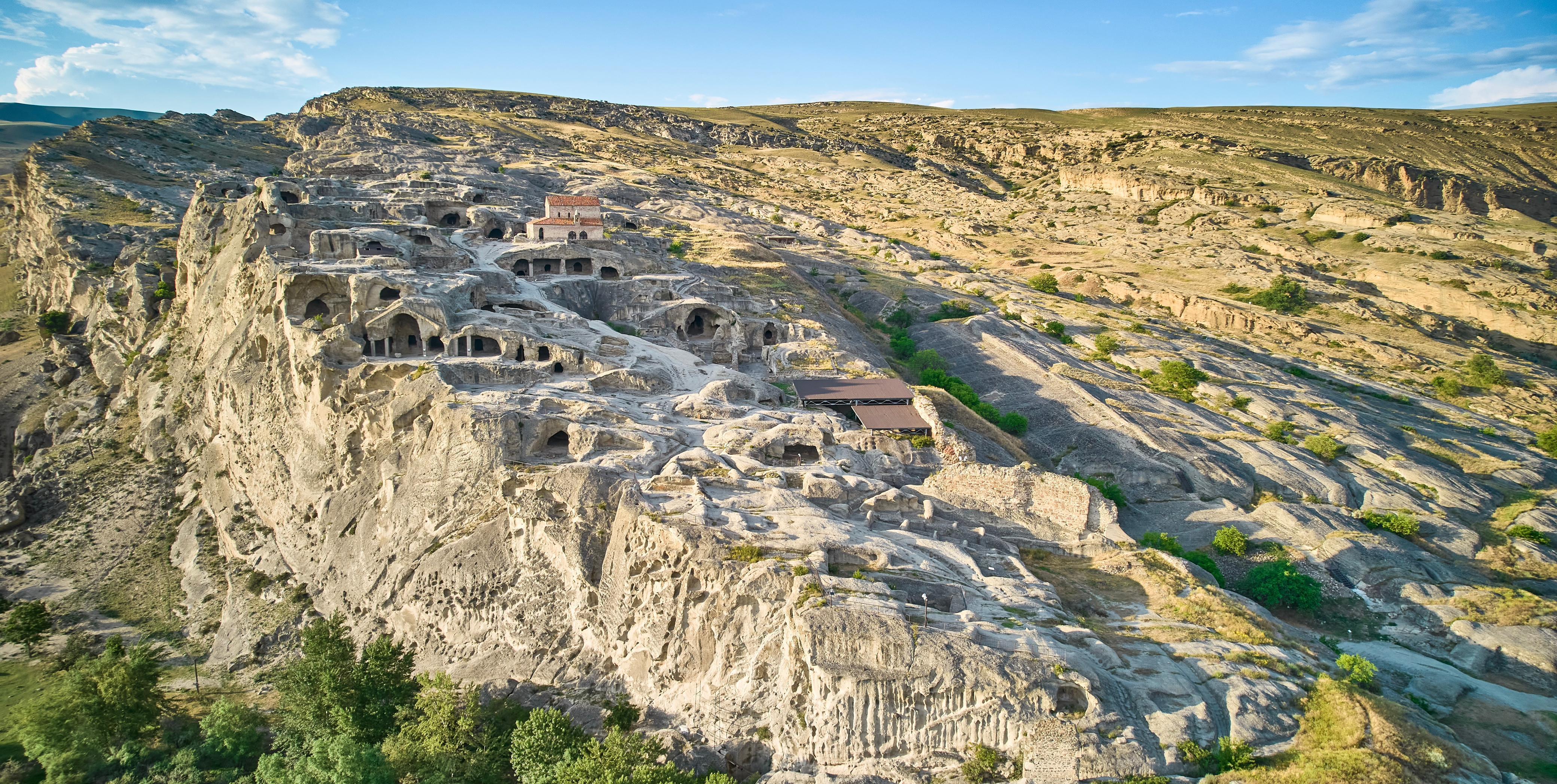
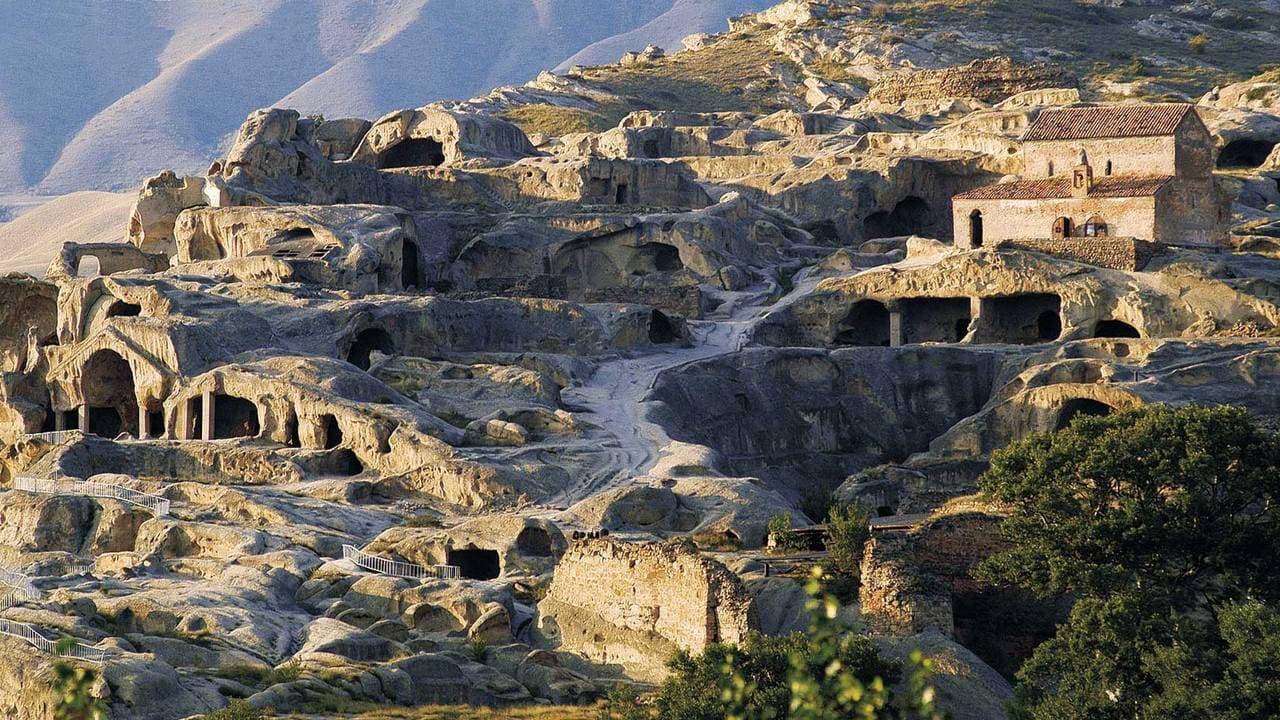
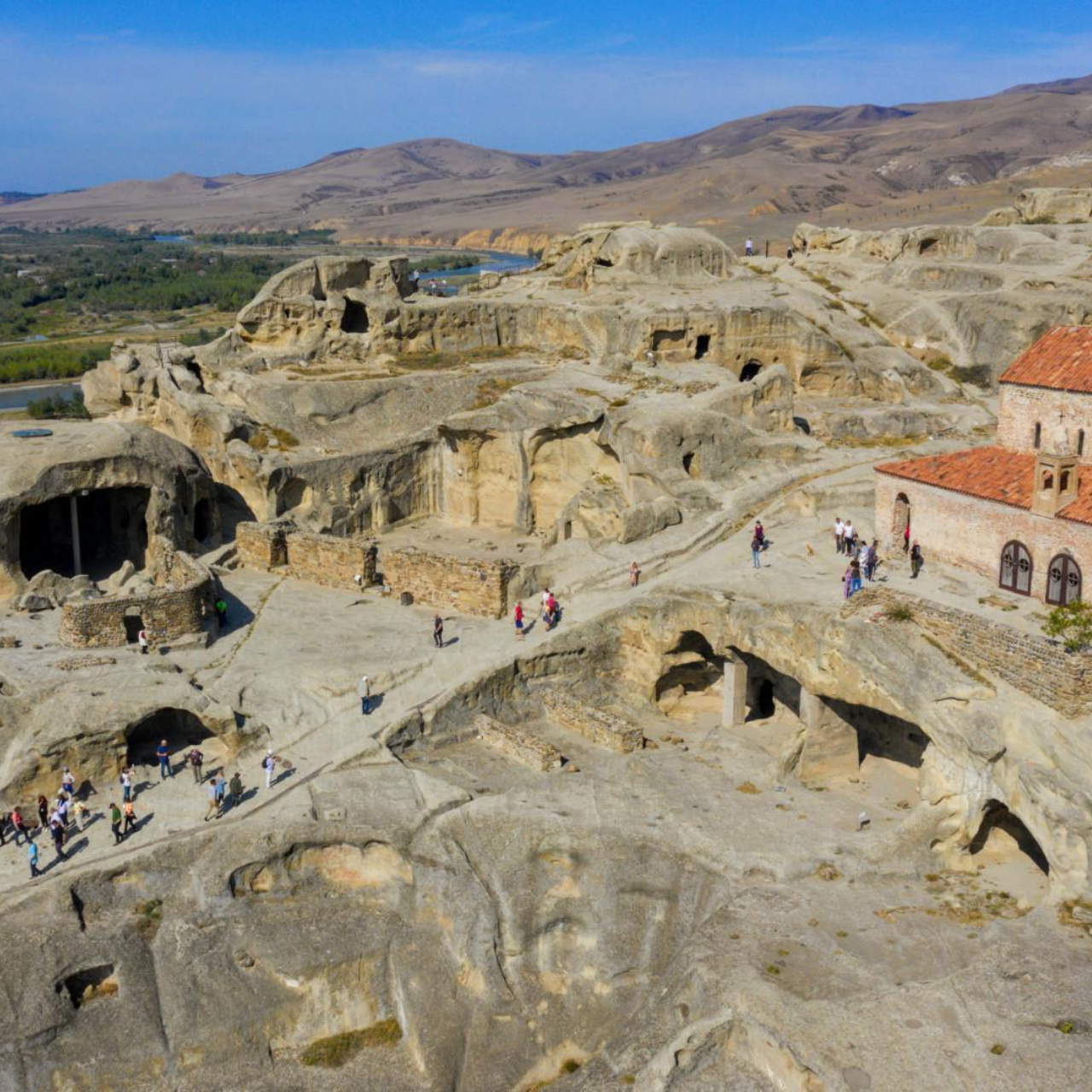
Uplistsikhe — "the lord's fortress" in Georgian — functioned as a fortified Silk Road entrepôt from the sixth century BCE until Mongol armies razed its upper terraces in the thirteenth century. Archaeologists have mapped more than one hundred and fifty structures hewn directly into the Kvirila River's sandstone cliffs: apothecary vaults with ceiling smoke-ports, a three-nave basilica converted from a pagan sun temple, wine cellars that still bear sixth-century grape-press grooves, and a amphitheatre with tiered benches facing a stage niche. The rock-cut throne hall — its domed ceiling seventeen metres above the floor — once hosted Kartli kings who governed the eastern trade corridor linking Persia to the Black Sea ports. Unlike Cappadocia's soft tufa or Petra's rose sandstone, Uplistsikhe's medium-grain volcanic tuff allowed masons to carve load-bearing columns and corbelled arches without collapse risk, enabling multi-storey complexes connected by tunnel staircases. Soviet archaeologists documented continuous habitation spanning two millennia, with occupancy layers revealing Greek amphorae, Sassanian silver, and Byzantine frescoes. The site's strategic elevation — seventy metres above the Mtkvari floodplain — gave sentries sightlines across fifteen kilometres of valley, while underground grain silos and cisterns supplied a garrison of two thousand through siege cycles. Today the Uplistsikhe day trip from Tbilisi tour market centers on half-day itineraries departing at nine in the morning, pairing the ruins with Gori's Stalin Museum and Mtskheta's Jvari Monastery in a Kartli heritage loop. The standard adult conservation fee stands at fifteen lari, collected at a gatehouse where English-language site maps mark the Queen Tamar hall, the apothecary corridor, and the secret tunnel descending to the riverbank. October through April brings fewer coach groups and cooler temperatures for the exposed cliff-face climb, though the site maintains ten-to-six hours year-round. Independent travelers arriving by marshrutka from Gori's central station face a two-kilometre uphill walk from Kvakhvreli village; guided transfers include direct drop-off at the lower parking terrace, reducing the approach to four hundred metres of switchback trail.
"Soviet archaeologists documented continuous habitation spanning two millennia, with occupancy layers revealing Greek amphorae, Sassanian silver, and Byzantine frescoes."
A step-by-step walkthrough of the visit — what you'll see, how long each stage takes, and the details that matter.
You leave Tbilisi's Rustaveli Avenue by eight-thirty, crossing the Mtkvari River as the highway climbs past Soviet-era apartment blocks into the Kartli plateau's dry grassland. Ninety minutes later your driver pulls into the gravel lot below Uplistsikhe's cliff face; you collect your ticket at the gatehouse and begin the switchback ascent, passing through a barrel-vaulted tunnel carved for pack animals. The first chamber — a two-storey wine cellar with circular press-beds — opens onto the central plaza, where you pause at the rock-cut throne room's entrance to study the coffered ceiling and column bases mimicking wooden temple architecture. A narrow staircase descends to the pharmacy complex, its walls blackened by centuries of medicinal-smoke curing. You cross the plaza to the basilica, tracing Byzantine cross-carvings over older sun-disc reliefs, then follow the north gallery to the amphitheatre's stone benches. The secret tunnel requires a headlamp; you descend one hundred and thirty steps through darkness to emerge at the river's edge, where guards once drew water during sieges. Returning to daylight, you photograph the valley panorama from the queen's balcony before retracing your steps to the gatehouse, two hours after entry.
The standard adult entry fee is 15 GEL.
The site is open from 10:00 to 18:00 daily.
The terrain is rugged and uneven, making it difficult for those with limited mobility.
No, there are no luggage facilities, so please travel light.
Arrive between 10:00–12:00 to avoid mid-day heat and large group crowds.
A guide is optional but highly recommended to understand the history of the rock-cut structures.
There are limited options near the entrance; bringing water and snacks is advised.
The most common way is to take a minibus or car to Gori, then a short taxi ride to the site.
Wear sturdy, closed-toe walking shoes and modest clothing if planning to visit the church.
Yes, photography is permitted throughout the outdoor archaeological areas.